
From Setback to Scholarship: When Community Must Hold Up the Community Builder
On July 21, 2026, I unexpectedly lost my job. Ten days later, on July 31, I underwent knee surgery. At first glance, these events appeared unrelated. One was professional. The other was physical. Yet together they revealed something I had spent years helping others navigate but had never fully experienced myself: what it means to become vulnerable after spending your life being the one others depend on.
A few weeks later, I received another email. I had been selected as a recipient of the 2026 IARSLCE Graduate Student Travel Support Grant. For many, it might have seemed like another scholarship announcement. For me, it represented something much deeper. It reminded me that community is not simply something we build for others; it is something that, at our most vulnerable moments, has the power to sustain us.
As a doctoral candidate entering my final semester, I have spent years studying leadership, community engagement, and culturally responsive practice. Professionally, I have served as a pastor, nonprofit founder, university administrator, and community convener throughout High Point, Greensboro, Winston-Salem, and communities across North Carolina's Piedmont Triad in the US. My work has centered on bringing together churches, universities, businesses, foundations, nonprofits, and government agencies to solve problems that no single organization could solve alone.
Ironically, just as my research was reaching its final stages, I became part of the very conversation I had spent years exploring. What happens when the leader becomes the one who needs leadership? What happens when the community builder suddenly needs community? For many Black men in leadership, these questions carry additional weight.
Research continues to document that Black professionals often navigate organizational environments where stereotypes, heightened scrutiny, biased evaluations, and limited access to influential networks create barriers to career advancement and long-term thriving. Recent scholarship argues that while much research has documented these barriers, we must also pay greater attention to the conditions that allow Black professionals to flourish rather than merely survive (Owens et al., 2026). My story is not evidence that every career setback experienced by a Black man results from discrimination. I cannot make that claim.
What I can say is that being a Black man in visible leadership often feels like living with very little margin for vulnerability. Confidence can be interpreted differently. Assertiveness can be misunderstood. Strength is expected. Weakness is rarely afforded (Kuwabara et al., 2024).
For years, I was known as someone who could connect people, solve problems, raise resources, preach hope, and help organizations navigate difficult seasons. In many ways, my public identity became synonymous with stability. People knew me as the pastor, the community leader, the university administrator, the nonprofit founder, and the person who was always helping someone else.
Then, almost overnight, I found myself unemployed, recovering from surgery, and trying to determine how I would pay tuition for my final semester of doctoral study after losing my employee tuition benefit. The experience challenged more than my finances. It challenged my identity.
Like many Black men, I have been socialized to believe that my value is measured by my ability to provide, protect, produce, and persevere. We are often celebrated for our resilience but rarely given permission to acknowledge our vulnerability. When our professional identity is interrupted, the loss extends beyond employment. It can affect our sense of purpose, our families, our confidence, and even our willingness to ask for help.
As a father, those realities became deeply personal. My responsibilities did not disappear because my employment did. Mortgage payments will still arrive. Tuition for my son remains due. My own doctoral expenses continued. Leadership did not pause simply because life became difficult. Yet this season also taught me something profound about community-engaged scholarship, which is sometimes I am on the receiving end of engagement.
Community engagement is often described as universities partnering with neighborhoods, nonprofits collaborating with residents, or organizations working alongside communities to create positive change. Those partnerships matter deeply. But perhaps we should ask another question: Who supports the people who have dedicated their lives to supporting everyone else? Who cares for the caregivers? Who encourages the encouragers? Who invests in the community builders when they experience unexpected setbacks?
For me, the answer came through the IARSLCE community. For more than three years I have built community within this network so for me the Graduate Student Travel Scholarship did more than offset conference expenses. It protected momentum. It allowed me to continue presenting my research, engaging with scholars from around the world, and preparing for the career I have spent years building. At a moment when it would have been easy to view my professional journey as interrupted, this scholarship reminded me that one season does not define an entire calling.
Community engagement, at its best, is reciprocal. We often focus our work on children, families, older adults, neighborhoods experiencing disinvestment, and historically marginalized communities. Yet vulnerability is not always immediately visible. Sometimes it wears a suit. Sometimes it stands behind a pulpit. Sometimes it teaches in a classroom or facilitates a community meeting. Sometimes it belongs to the leader who has quietly spent years helping everyone else succeed. If we are serious about building thriving communities, we must also consider how we sustain the people who carry much of that work.
As I prepare to travel to New Orleans, I do so with renewed gratitude, not simply because I will present my research, but because I have experienced the very principles that community-engaged scholarship seeks to advance. Reciprocity is not merely a research framework. It is a way of living. This season has taught me that leadership is not measured by how rarely we fall. It is measured by our willingness to continue serving while also having the humility to receive support when we need it. My setback did not end my purpose. Instead, it deepened my understanding of it.
For years, I believed my greatest contribution was building community for others. Today, I understand something even more important: communities flourish not only because we build them, but because, in our moments of greatest need, they choose to reinvest in us.
References
Owens, T. L., Ruggs, E. N., Marshburn, C. K., & Smith, S. G. (2026). Thriving while Black: A systematic review of Black employee workplace experiences across the career life cycle. Applied Psychology, 75(3). The review synthesizes research on structural barriers and the conditions that enable Black professionals to thrive.
Kuwabara, K., et al. (2024). Intersectional Penalties for Perceived Interpersonal Justice Violations among Black and Hispanic Male Leaders in the Workplace. Journal of Business and Psychology. This study found that Black and Hispanic men may be evaluated more harshly than comparable leaders from other groups for perceived interpersonal missteps, highlighting the influence of racialized stereotypes on leadership evaluations.
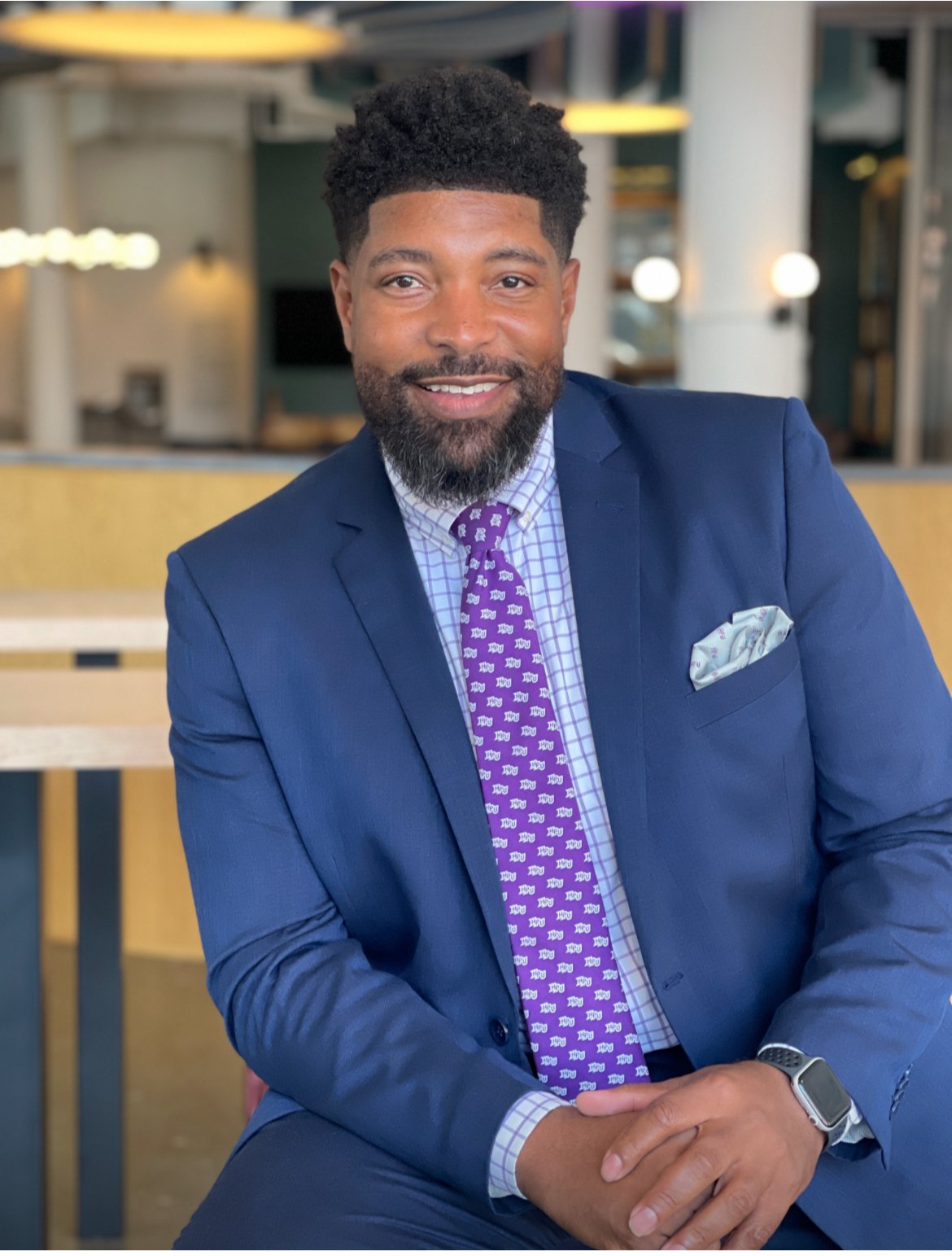
Lovelle McMichael is a senior pastor, entrepreneur, author, consultant, motivational speaker, and community leader. As a servant leader, Mr. McMichael is the former Assistant Director of the Center for Community Engagement at High Point University where he oversaw the student-led volunteer center and supervised the AmeriCorps VISTAs, working with more than fourteen community partners. He is the former Director of Community Engagement at North Carolina Agricultural and Technical State University. Currently, he is serving as the Senior Pastor of the Greater New Hope Baptist Church (High Point, NC), providing individual and congregational, spiritual, and pastoral care to the members and community. He served as a Commissioner on the One High Point Commission, which was designed to support seeking reparations for the African American citizens of High Point. He specializes in developing programs and services related to community outreach and social justice. Additionally, he has expansive professional knowledge and skills in black male achievement and youth intervention services. Mr. McMichael previously managed Turning Point, a comprehensive residential integrated-services youth facility specializing in prevention and intervention services for young men in the foster care system.
Mr. McMichael has been recognized and honored for his commitment to serve and his impact in communities throughout the country. A few of his recognitions include being a member of the Phoenix Business Journal’s Class of 40 Under 40, a recipient of the Thurgood Marshall Award of Merit, a State of Black Arizona Community Luminary, and a recipient of the Dr. Martin Luther King, Jr. Living the Dream Award for making Phoenix “a better place to live through a lifelong commitment to creating a compassionate and socially just society.” Additionally, he is the author of Transforming the Minds of Men, Maximizing Potential from Childhood to Manhood.
Mr. McMichael received a Bachelor of Science degree in Business Administration with a specialization in marketing from Millersville University (PA), a Master’s degree in Secondary Education from the University of Phoenix (AZ), a teaching certificate in Secondary African American Studies from the Arizona Department of Education, and a Master’s degree in Divinity from Wake Forest School of Divinity (NC). He completed the Chaplain Residency Program at Moses Cone Hospital for the 2021-2022 term. He is a Ph.D. student in the Leadership Studies program at North Carolina A&T and plans to graduate in December 2026.